

This blog is going to be a mix of tips from various sources and things I’ve discovered in my years of sewing. I will be doing this periodically so as not to overwhelm you with too much information.
The one thing I found to be true is, work with the best tools you can if you want a quality product in the end. Your project will only be as good as your weakest product in your project.
One stabilizer does not fit all situations!!! Check out my blog on how to use stabilizers for the best outcome of machine embroidery.
The old adage … Measure twice (or 3 times to be sure) and cut once. It also helps to read the instructions over before your start your project. (:-)
If you want to make a quilt that will be an heirloom to hand down, be sure to use good quality cotton fabric from a quilt store locally or online. Don’t go for cheap fabric, as it won’t last. Use cheaper fabric for projects that will be considered “disposable” in time.
Check your tension and make sure that your threads are sewing evenly through your fabric. Especially when quilting through two layers of fabric and batting. You may need to loosen the tension or tighten it depending on your machine and thread. Make a sample sandwich and test on that before starting on the real quilt.
Always use good quality threads for any sewing project but particularly for quilting and embroidery. Again, you are only as good as your weakest link. Don’t let that weak link be thread that shreds or breaks all the time. I personally like Aurafil for sewing and piecing and King Tut by Superior threads, or Sulky 30w for machine quilting.
Don’t forget to start with a new Quilting needle, preferably 90/14, when you start machine quilting a new quilt. The same goes for embroidery, a new embroidery needle will make the project go smoother.
If your thread keeps shredding or breaking, try this; Change your needle, re-thread the top thread and reset your bobbin. Most times this will take care of the problem. If it doesn’t, clean out your machine. Another thing you can do is take a cotton ball and rub it against the bobbin case, throat plate or even the needle to see if there is a burr that could cause breakage or shredding.
I am constantly saying to my students, they spend thousands of dollars on these beautiful new sewing/embroidery machines that do everything imaginable, then scrimp on supplies. Good machines need good thread, needles and fabric to run efficiently.
Periodically, I’ll be giving you more blogs with tips. If you have a neat tip I can pass on, I’m sure my readers would enjoy hearing it. One reader commented on the blog about metallic thread. She said she uses Floriani metallic and has no trouble with breakage. Nice tip!
Until next time, Happy Sewing!
Be sure to check out past blogs to see some interesting articles about sewing, embroidery and quilting.
PLEASE SCROLL DOWN TO SEE PAST BLOGS OR CLICK ON THE “PAST BLOGS” LINK ON THE RIGHT.

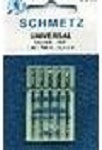 needles in our sewing box and organize them. I teach an Embroidery 101 workshop, which covers the use of stabilizer, threads and needles. It still surprises me when my students ask me the difference in needles. I’m going to try to simplify this mystery and give you a place to go back to when you need to choose a needle for a certain sewing, quilting or embroidery project.I have worked with most of these needle types and when you use the correct needle, your project will always look the best.
 I taught a free motion quilting class yesterday and I was explaining the difference between the thread sizes. For some people, thread thickness can be very confusing. It’s hard to compute in our brains why the higher the number, the thinner the thread and the lower the number the thicker the thread. I am going to try to simplify which is which.
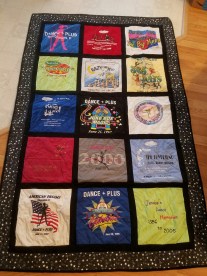 Ever wanted to do something with all those t-shirts your kids get from school, sporting events, or dance recitals? How about all the ones your brother, husband, or sister have that they just can’t get rid of. Here’s the perfect solution to save those memories and make something that they will cherish for a long time.
 One of the questions I was asked was the best way to embroider on handkerchiefs. Yes, people still like to carry a handkerchief. They are also wonderful gifts for weddings, birthdays, or for a special occasion like a graduation. Anything that you want to remember. You may want to give a lady a lovely handkerchief with crochet edges or lace. Maybe a nice manly handkerchief with his initial in the corner. Handkerchiefs are best embroidered on a wash away stabilizer. I like Floriani Wet n Gone, Wet and Gone Tacky, and I have used a product called Vilene. Most water soluble stabilizer will do. You can hoop the stabilizer and hankie or you can also “float” the hankie on top of the tacky if you don’t want to hoop both. There’s a wonderful video and tutorial on EmbLibrary (link at right) if you are like me, and want a visual to help you learn.
 Sewing Scoupe